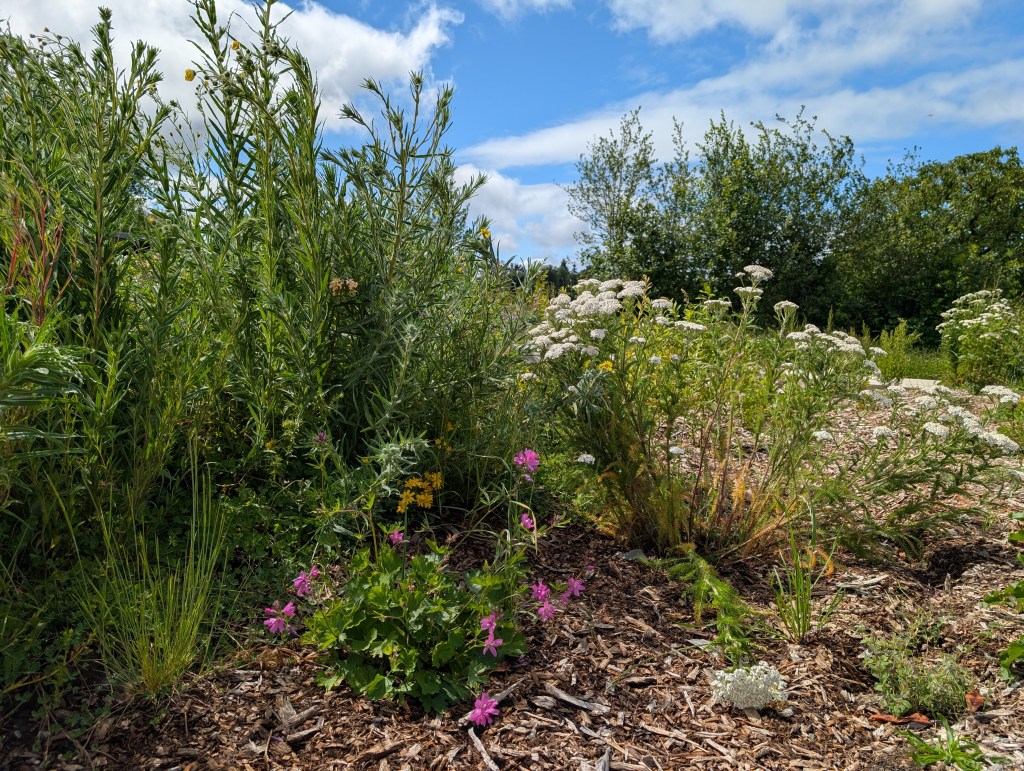
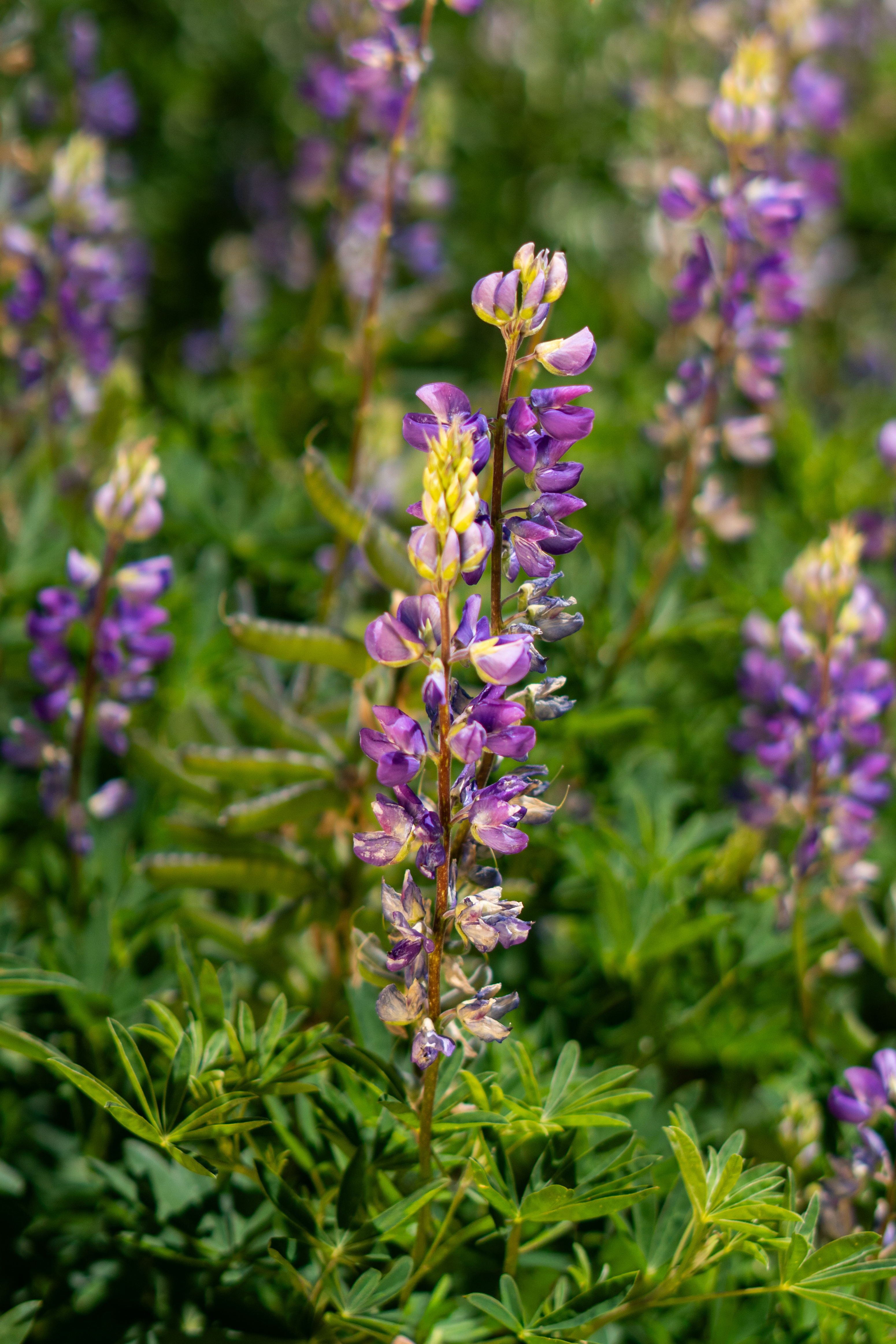
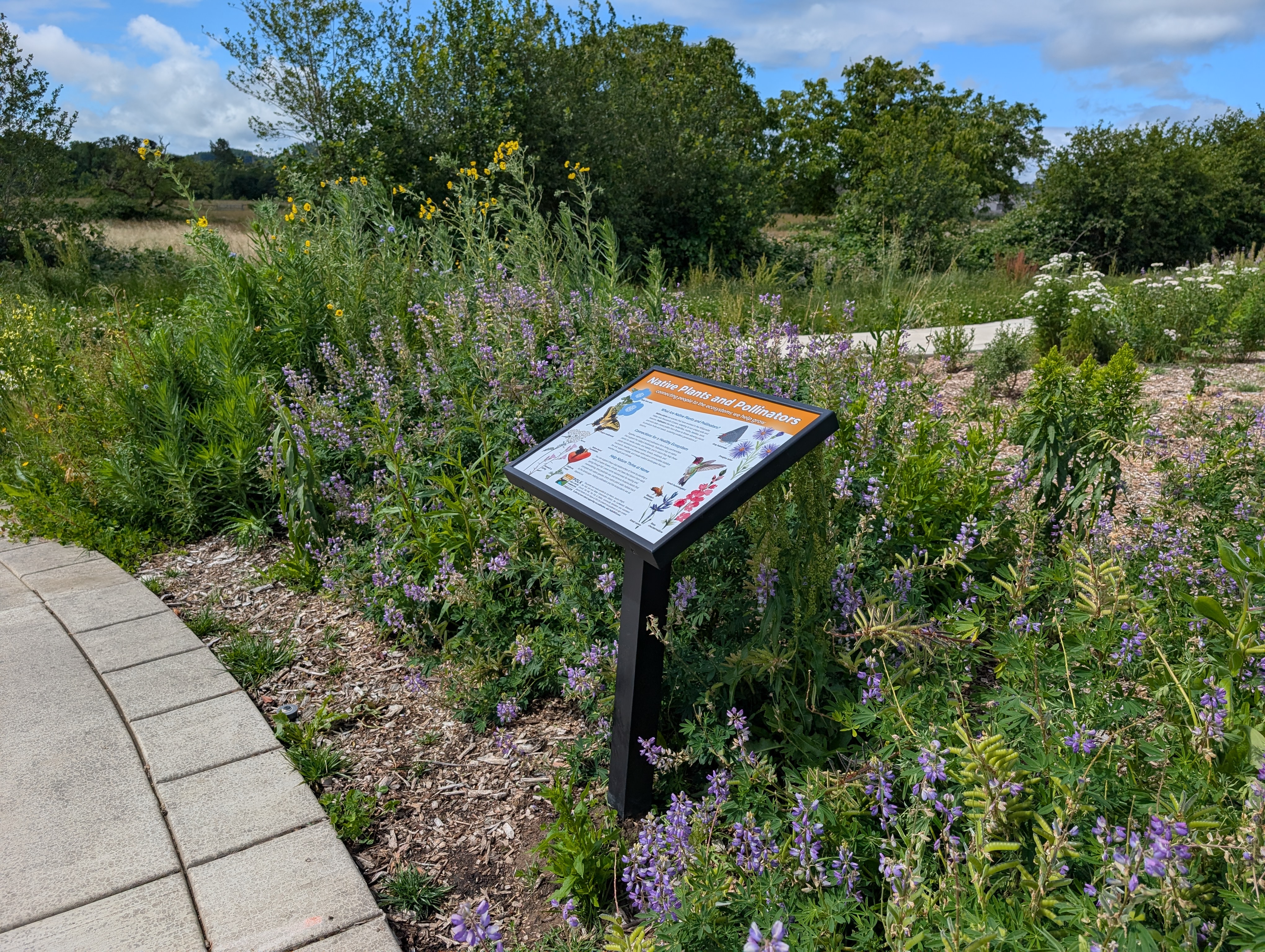
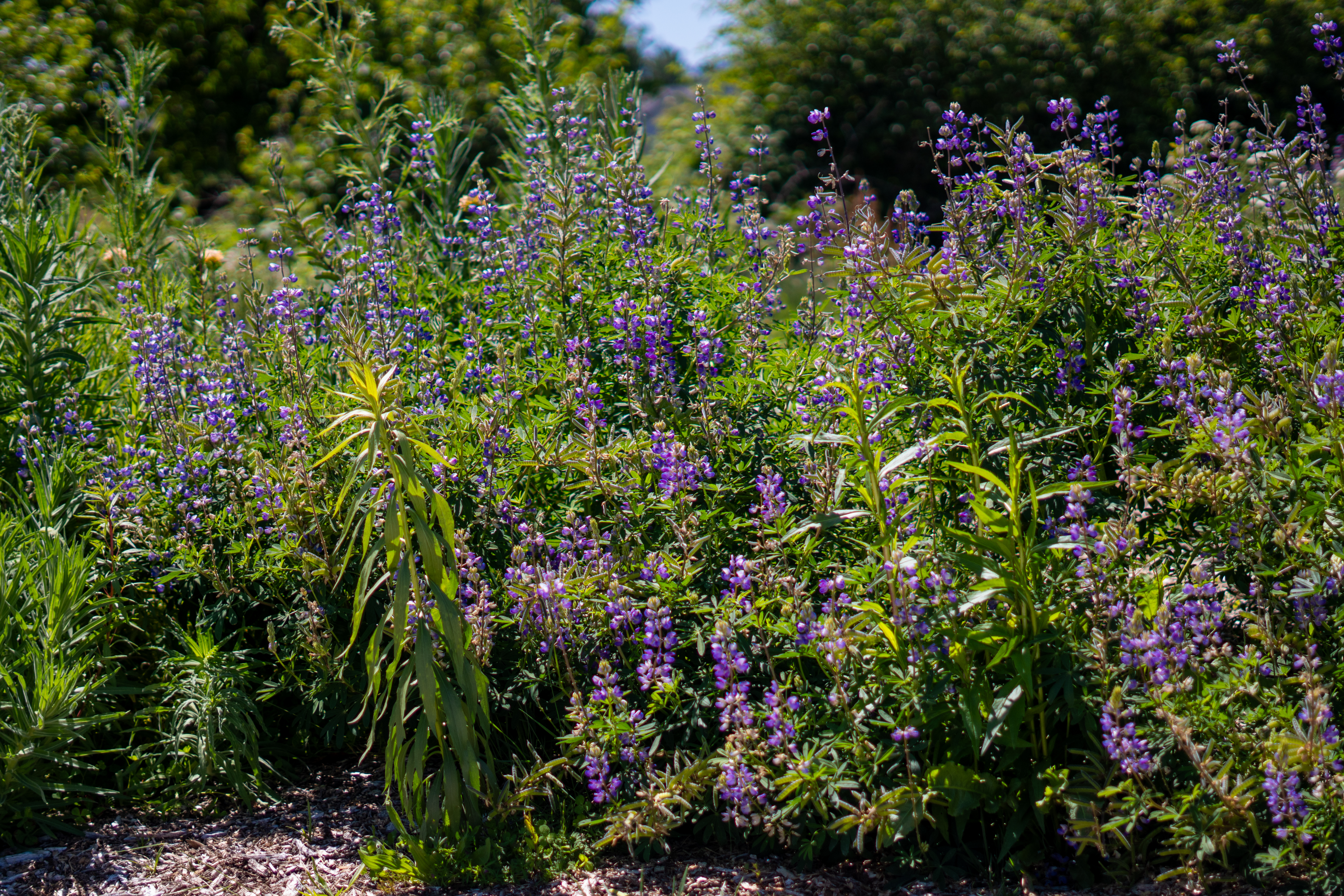
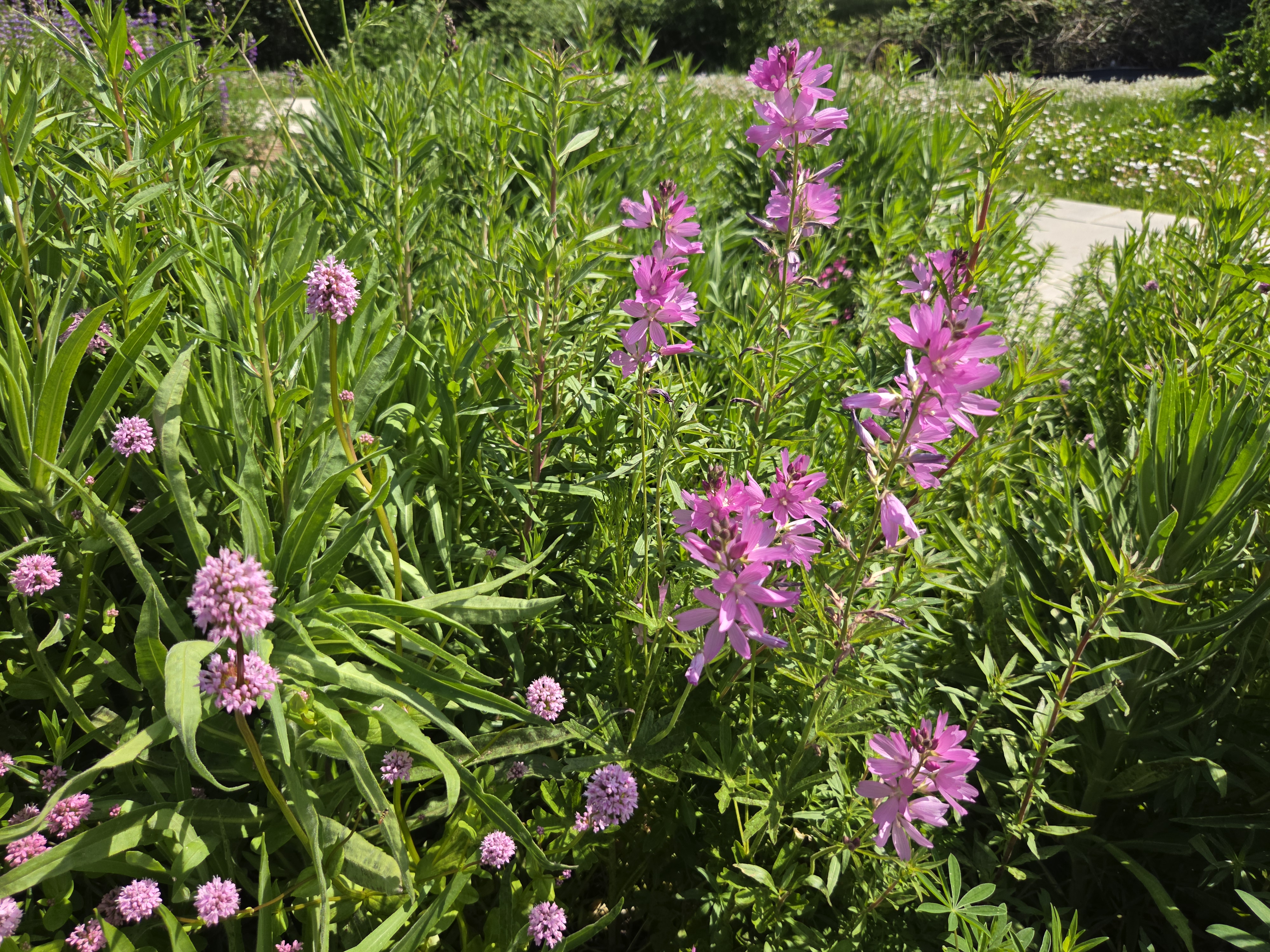
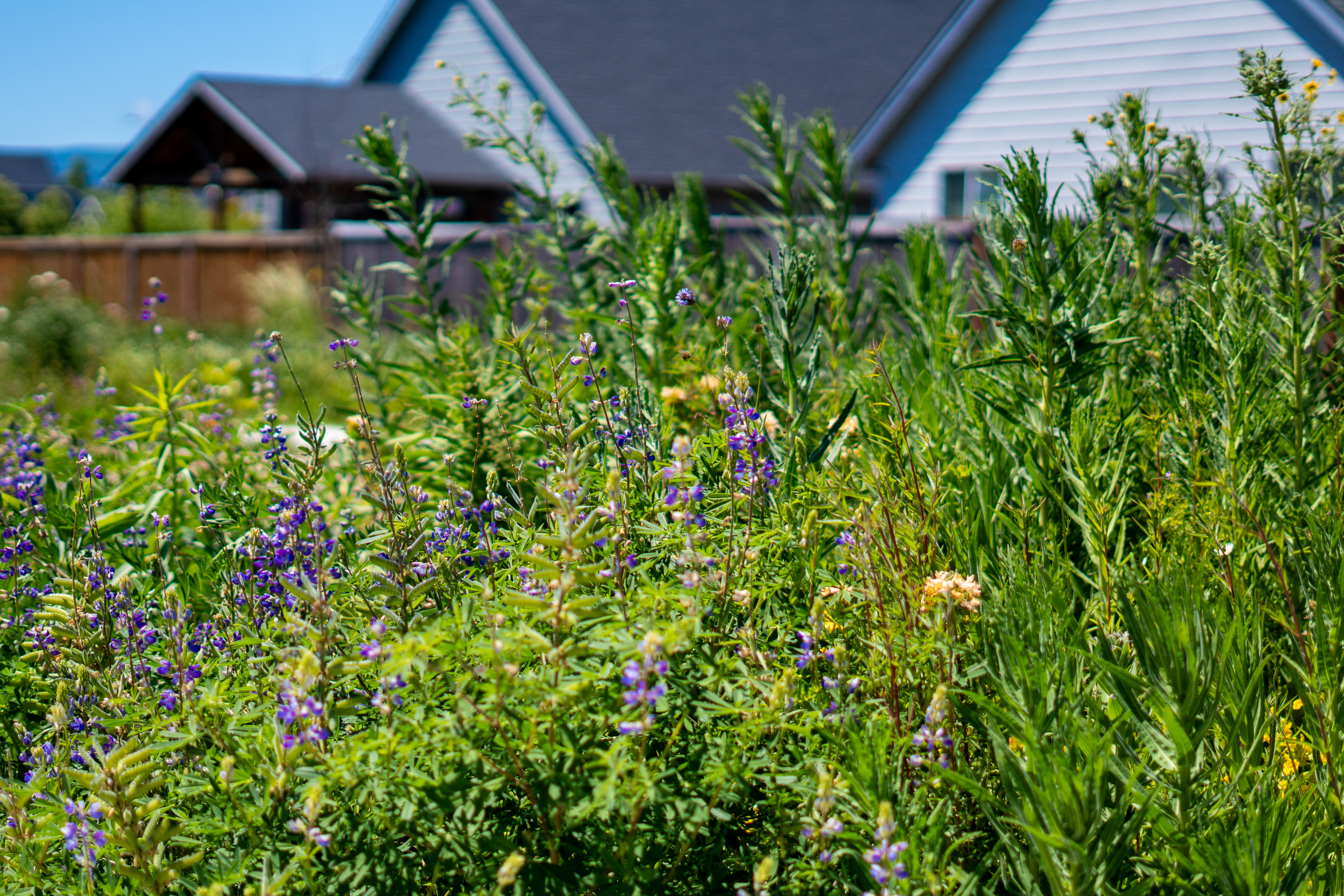
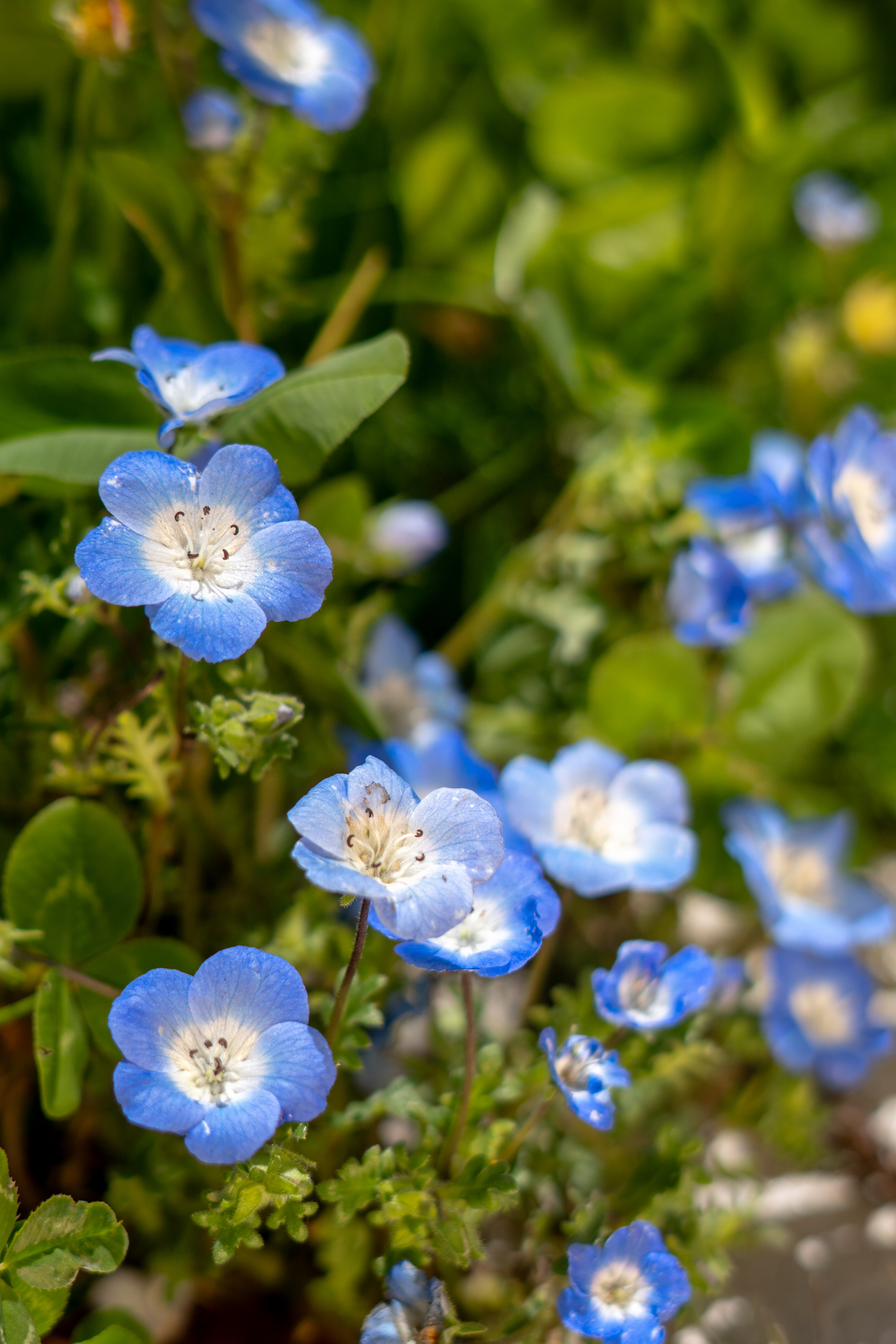
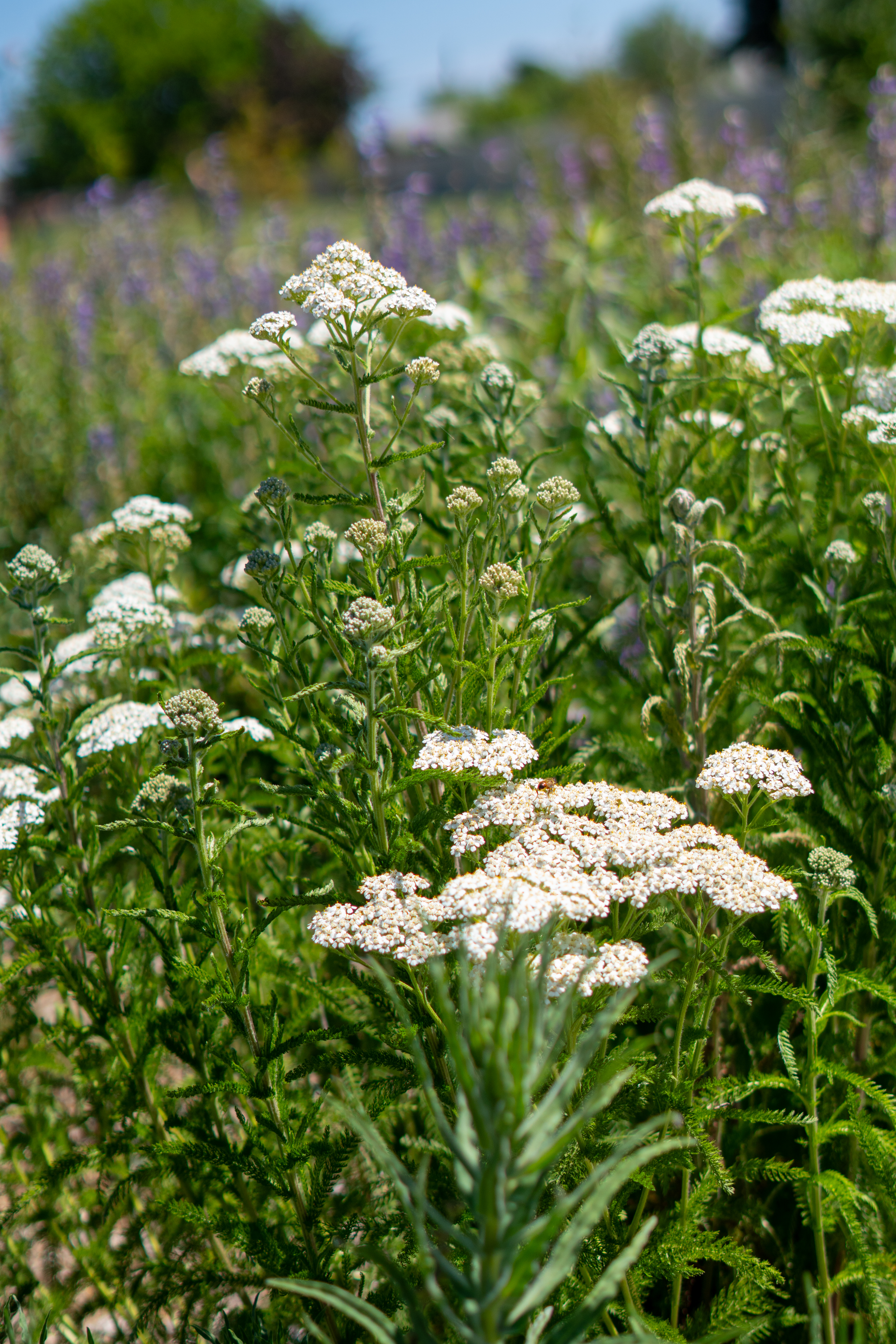
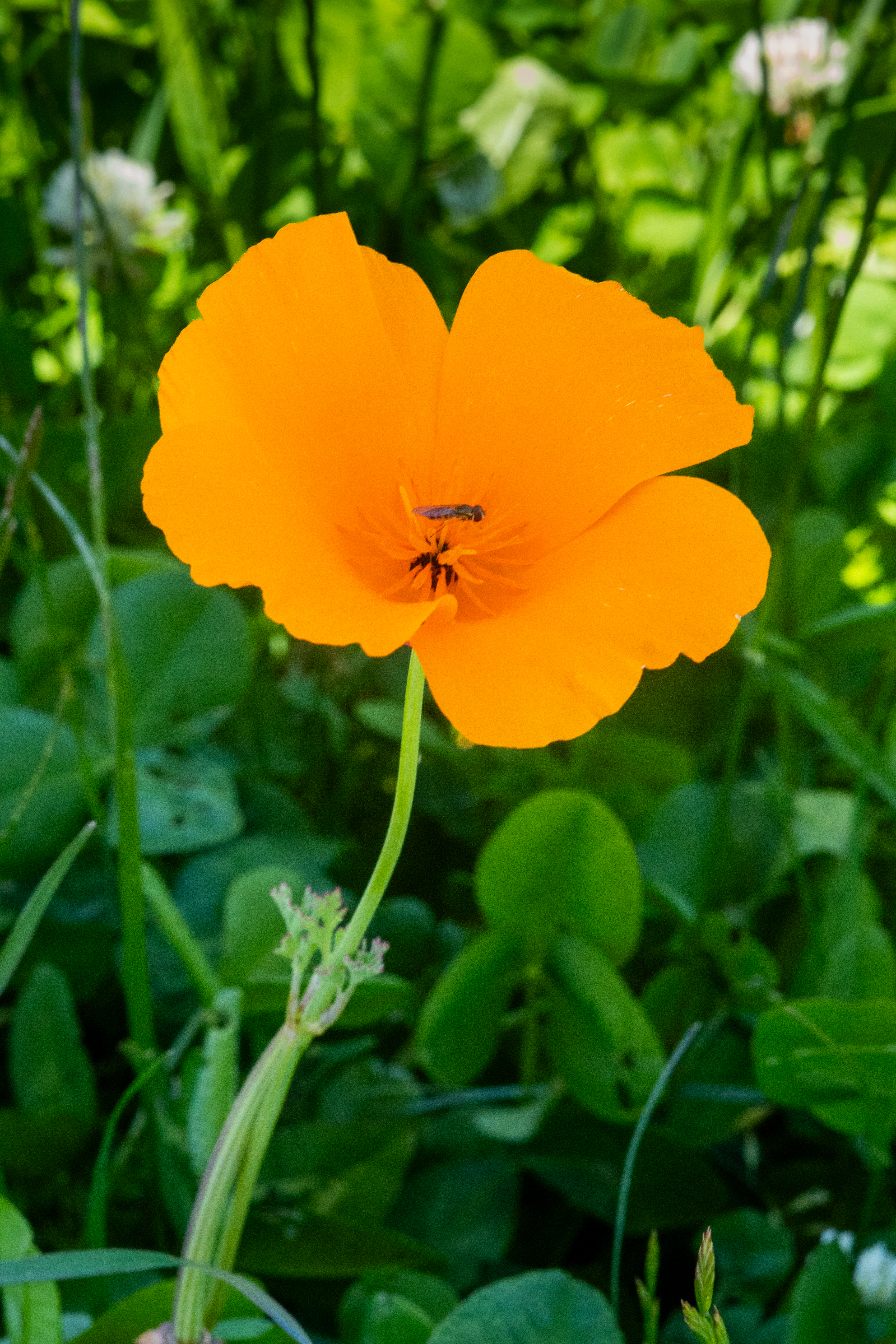
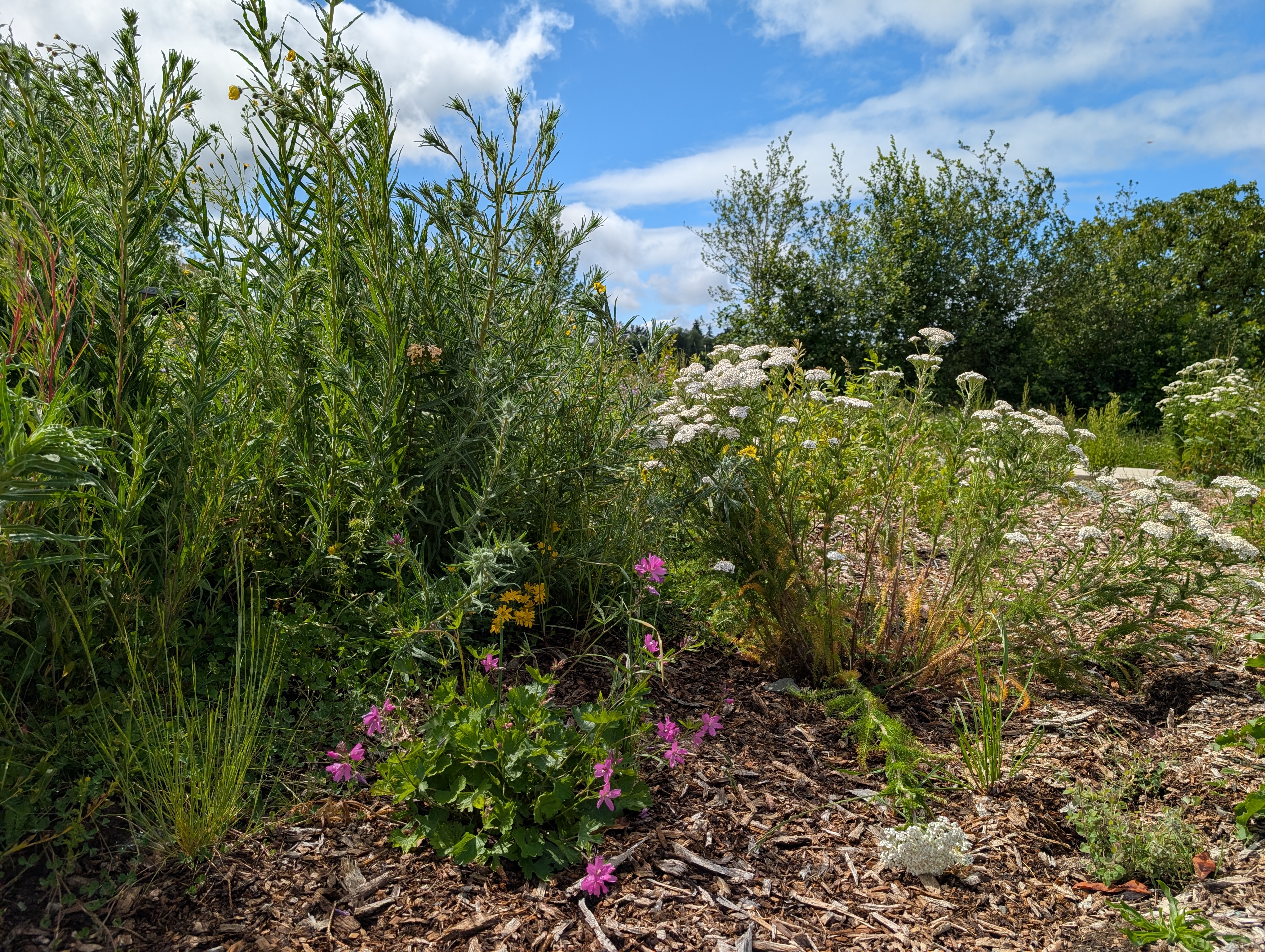
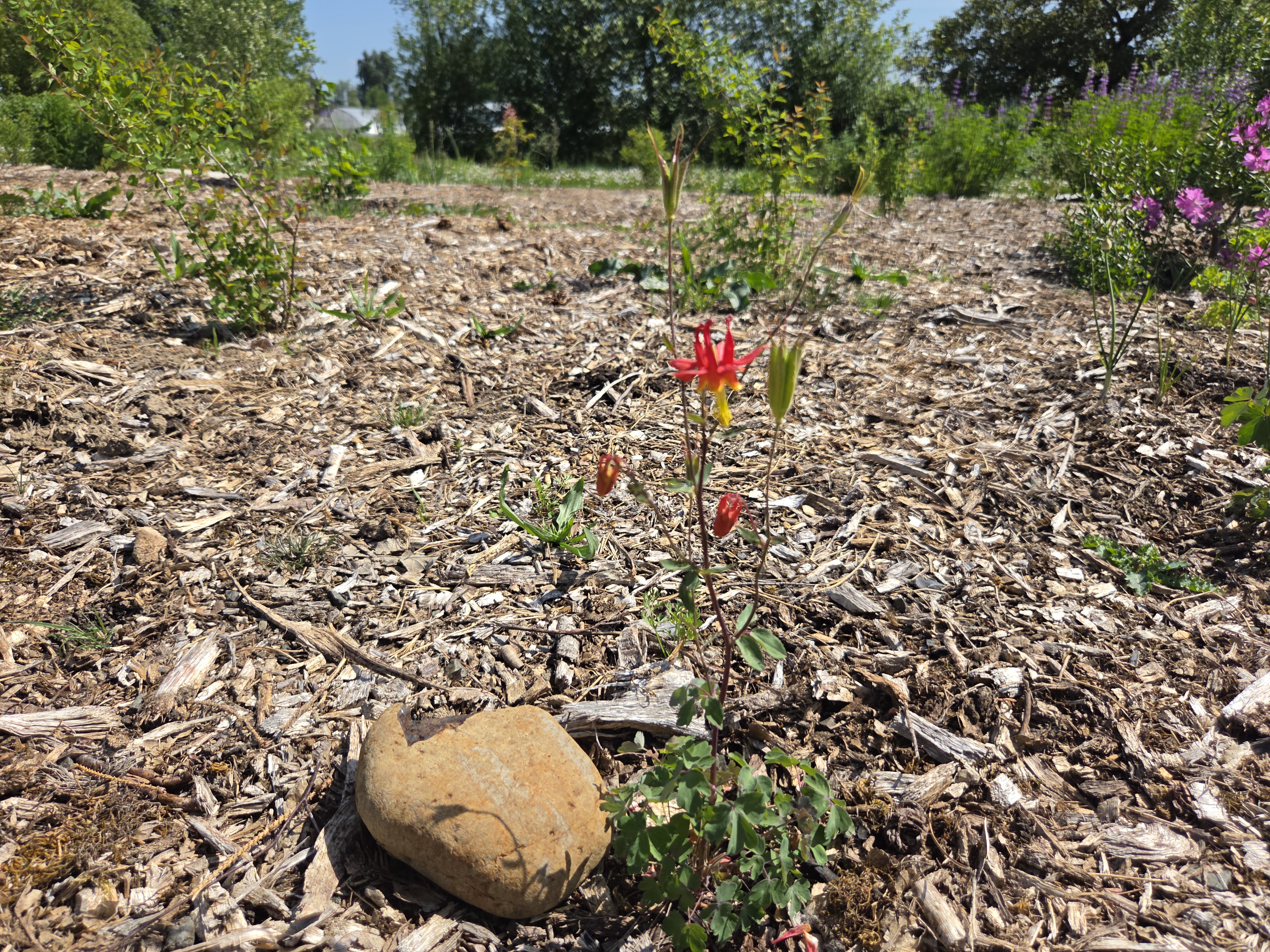
This garden was brought to life in October of 2025, and oh, what a wondrous transformation it has undergone in just a few short months! As spring dawned in March, the enchanting Camas (Camassia leichtlinii) began to bloom, soon joined by the delicate Baby Blue Eyes (Nemophila menziesii) and the radiant Sea Blush (Plectritis congesta). The spring display was nothing short of breathtaking, with the Riverbank Lupines (Lupinus rivularis) taking center stage and the Rose Checkermallows (Sidalcea asprella) adding their vivid allure. Now that summer is upon us, we are greeted by the vibrant blooms of Yarrow (Achillea millefolium) and Tarweed (Madia elegans), alongside our cherished Oregon Sunshine (Eriophyllum lanatum). The temperatures are fluctuating rapidly, and our temporary irrigation system has kicked into action, lovingly nourishing our plants once a week for an hour. This, along with a plentiful layer of compost and mulch, will empower these species to thrive and flourish through the heat of summer. Once this year concludes, we will scale back on the watering, as these resilient plants will have found their footing. It’s essential to understand that irrigation for native plants is a temporary measure, designed solely to nurture their establishment. These remarkable plants have adapted beautifully to our region’s unique soil, weather, and seasonal rhythms, effortlessly surviving without summer irrigation. Furthermore, it is vital to remember that overwatering during the summer can harm many native species, causing root rot and stifling their growth. I wholeheartedly encourage everyone to come and explore this garden, allowing it to inspire you to plant your own native species! Just last week, we held a volunteer event to weed the garden and create identification signs for our beloved plants, and we are eager to host many more such events in the near future. If you happen to live in Dallas, Oregon, we warmly invite you to visit the enchanting John C. Bernard Park!
 purposefullandscapes.com
Leave a comment